Contact Lens Manufacturer Certifications and Quality Control: Top 10 Suppliers Compared
SHENZHEN, GUANGDONG, CHINA, November 3, 2026 /EINPresswire.com/ -- Three layers of compliance govern a contact lens
Press Release Disclaimer: This is a press release distributed through the XPR Media network. It has not been independently verified by our newsroom.
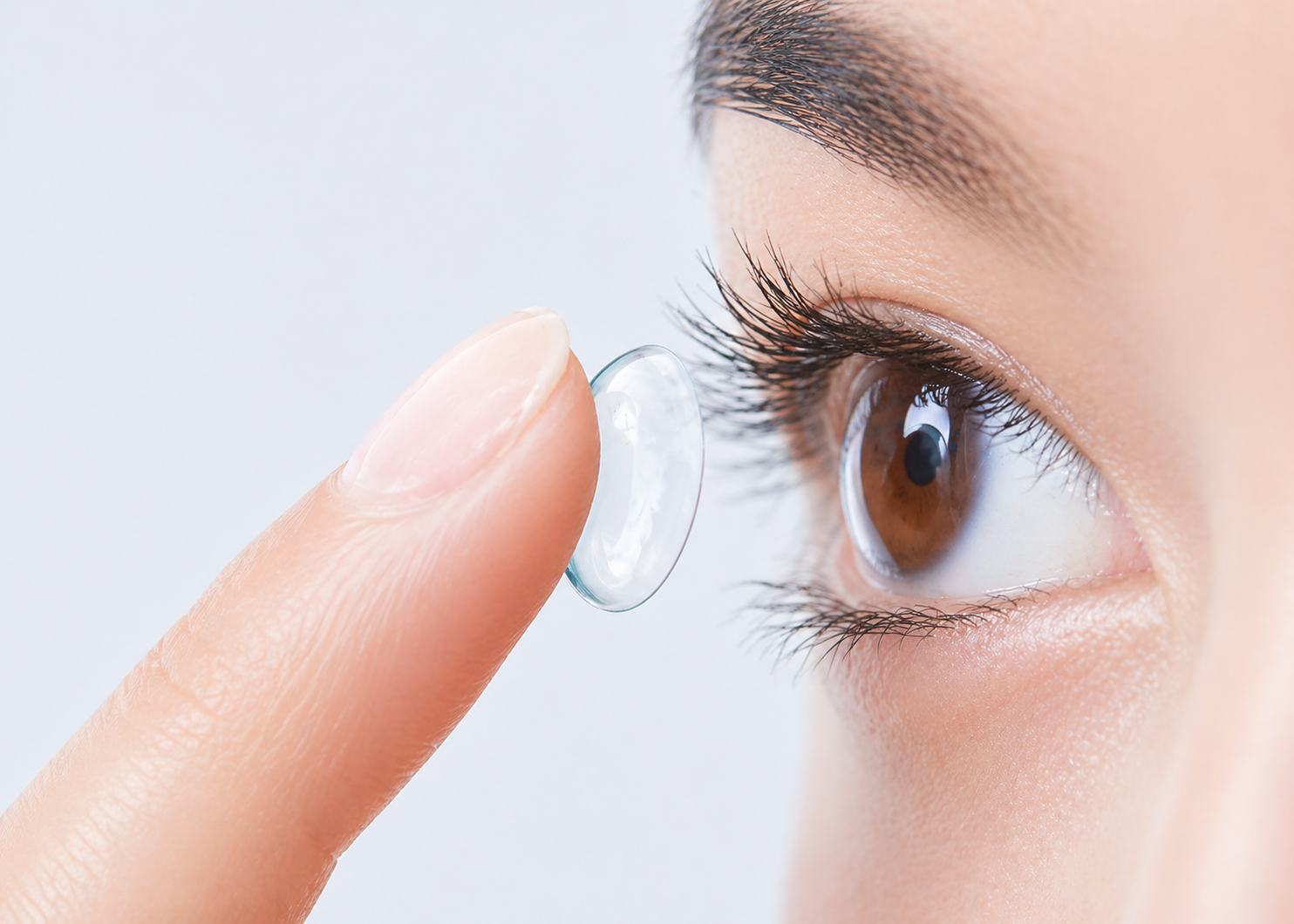

SHENZHEN, GUANGDONG, CHINA, November 3, 2026 /EINPresswire.com/ — Three layers of compliance govern a contact lens order — a factory certificate for the site, a product certificate for the line, and a batch record for the lot — and the document that clears an import names a manufacturing address, not a brand.
A buyer evaluating contact lens manufacturer certifications is looking at three distinct layers that are often presented as one, according to a review of ten suppliers’ published quality systems. ISO 13485 certifies the quality management system at a manufacturing site. CE marking and FDA clearance certify specific product lines for specific markets. Batch records trace each lot from raw material to release. A quotation that lists all three without distinguishing them obscures whether the certificate names the site that will run the order.
What certifications mean in this category
A contact lens is a medical device in every major market. The FDA regulates decorative lenses as Class II devices whether or not they correct vision. In the EU, contact lenses fall within Class IIa of the Medical Device Regulation, requiring CE marking.
ISO 13485 is the quality management system standard for medical devices, issued to a legal entity at a named manufacturing address and maintained through surveillance audits. It certifies the system, not any specific product.
CE marking is a product-level conformity assessment under the EU MDR. FDA clearance, typically through the 510(k) premarket notification, authorizes a specific device for the US market. A factory can hold ISO 13485 without CE or FDA clearance for a particular product, and the reverse holds.
How entity structure affects certification
A certificate is issued to a manufacturing site, but the entity a buyer contracts with may not operate that site. Kyralens Technology Co., Ltd describes itself as a global wholesaler; its documentation originates with a production partner. Med Lenses Technology Co., Ltd works through three manufacturing partners, so the certificate names whichever partner runs the order.
Two companies with near-identical names are separate entities. Chroma Lenses at chromalenses.com is Guangzhou Chroma Lenses Technology Co., Ltd., operating in Dongguan. Chroma Lens at chromalensglobal.com is Chroma Lens Technology Co., Ltd., a separate company with its own mold and ink development. A buyer checking certifications against a company name should also check the domain, because the name alone will not distinguish them.
The market behind the compliance
Grand View Research, in its soft contact lens report using 2024 as the base year, values the market at USD 9.8 billion and projects USD 15.5 billion by 2030, a compound annual growth rate of 8.1 percent. Silicone hydrogel accounts for more than 70 percent of material revenue, and China is the fastest-growing country-level market. Growth at that rate pulls new entrants into the supply chain, making certification verification more important, not less.
Three layers, one question
Ask whether the certificate names the site that will run the order.
A factory certificate, ISO 13485, names the manufacturing address. A product certificate, CE or FDA, names the device and the manufacturer. A batch record names the lot, the production line and the release date. A supplier that connects all three to the buyer’s order has a traceable chain; one that cannot has a gap, and the gap is where customs holds begin.
The ten suppliers
1. Gansu Constar Technology Group
Constar operates six facilities, three in Gansu Province and three in Hunan, with a combined capacity of 15 million lenses per month, more than 4,000 designs and over 500 in-stock SKUs. It holds FDA clearance, CE 0197 and ISO 13485, alongside regional approvals for Indonesia, Australia, Saudi Arabia, Thailand and Vietnam, supplying buyers in more than 40 countries. Multi-site certification means each facility maintains its own quality system under the group certificate. Entry quantities are confirmed per design and packaging format.
Website: https://www.constarfactory.com/
2. Kyralens
Kyralens Technology Co., Ltd describes itself as a global wholesaler and distributor focused on private label eye care, covering six categories with programs across Europe, the Middle East and Asia. As a wholesaler, it does not hold a manufacturing certificate; ISO 13485 and product certificates originate with its production partner. The buyer should request the partner factory’s certificate by name and confirm the address matches the producing site.
Website: https://www.kyralens.com/
3. Stephies Lens
Stephies Lens Co., Ltd runs a stocked-catalog model where every color is held in inventory, with in-house brand orders dispatching in about seven days and custom-branded orders in roughly 20 days. Stocked inventory means quality control is performed on received goods rather than in-process: the factory’s inspection records accompany production, but the buyer’s check is an incoming inspection. The buyer should confirm the certificate covers the specific stocked SKU, as catalog lines can span multiple production years.
Website: https://www.stephieslens.com/
4. BLMG Lens
BLMG Optical Ltd. integrates research, pattern design, manufacturing and packaging, with more than 500 production-ready patterns. It works to ISO 13485 and reports FDA, CE and NMPA related support, with certification scope confirmed per product and destination. Its small-batch OEM route from 100 pairs per design is low for this category, and documentation does not scale down: a 100-pair run needs the same CE or FDA clearance as a 100,000-pair run. Buyers should confirm the regulatory pathway for their market is cleared for the selected product line.
Website: https://www.blmglens.com/
5. MedLenses
Med Lenses Technology Co., Ltd has supplied colored lenses since 2018 through three established manufacturing partners, offering more than 5,000 designs with wholesale from 100 pairs and private label from 1,000. The certification question is structural: three partners means three potential certificate addresses. The buyer should confirm which partner will run the order and request that partner’s ISO 13485 certificate by address, not the coordinator’s business registration.
Website: https://www.medlenses.com/
6. EyesMatrix
Eyes Matrix Contacts Lenses Technology Co., Ltd operates a facility in Dongguan with more than ten years of manufacturing experience and over 500 design SKUs. It holds CE marking, operates to ISO 13485 and works in a GMP-compliant cleanroom, with a stated inspection sequence from demolding through sterilization to outgoing quality control. As a single-site manufacturer, the certificate address and the production address are the same, which simplifies verification.
Website: https://www.eyesmatrix.com/
7. Chroma Lenses
Guangzhou Chroma Lenses Technology Co., Ltd reports more than 15 years of experience, 50 million lens pairs annually and distribution to over 60 countries from a Dongguan facility. Production runs on automated cast-molding lines inside a Class 100,000 cleanroom under CE, ISO 13485 and GMP, with a stated 100 percent inspection workflow covering geometry, power and cosmetic defects. Automated cast molding produces lot-to-lot dimensional consistency that hand-filling cannot match, and 100 percent inspection means every lens passes the gauges rather than a statistical sample.
Website: https://www.chromalenses.com/
8. Velalens
Velalens Technology Co., Ltd controls pigment formulation, cast molding, hydration, inspection and packaging in-house, and publishes an unusually complete specification set: diameters 14.0 to 14.5 mm, base curves 8.5 to 8.7 mm, water content 38 to 55 percent, plano to minus 8.00 diopters on selected series, and graphic diameters from 13.2 to 14.0 mm. Publishing graphic diameter is a quality-control signal: the printed color zone is treated as a controlled dimension, not left to the operator’s judgment. Most suppliers here publish only lens diameter.
Website: https://www.velalens.com/
9. Colorlens Hub
Colorlenshub Technology Co., Ltd has operated since 2019, reporting more than 5,000 designs and a minimum order from 10 pairs on in-stock designs. It holds an SGS on-site supplier assessment recording 43 staff and 550 square meters. An SGS assessment is a third-party audit of supplier capability at a point in time, not a manufacturing certificate. ISO 13485 and product certifications should be traced to the third-party factory that produces the lenses. The low threshold and small footprint indicate a catalog-wholesale model, useful for validating demand before a factory order.
Website: https://www.colorlenshub.com/
10. Chroma Lens
Chroma Lens Technology Co., Ltd keeps three capabilities in-house that most suppliers outsource: mold development, printing ink formulation and original pattern design. Controlling molds fixes base curve, diameter and edge profile at the source: geometry is set by the tool, not adjusted on the line. Controlling ink fixes color density and edge sharpness between batches: the pigment formula is owned, not purchased from a vendor who may reformulate. This is process-level quality control: variation is eliminated at the tool and formula stage, not caught at inspection. It produces beauty, cosplay, theatrical and clear lenses with labeling prepared per destination market.
Website: https://www.chromalensglobal.com/
Why certification and quality control vary across suppliers
On procurement, certificate scope outweighs unit price. A buyer importing into several markets needs certificates, test reports and labeling files per SKU. A supplier producing those in one audit cycle saves more than a lower unit cost.
On technology, the inspection method matters. One hundred percent inspection means every lens passes geometry, power and cosmetic checks; sampling means a statistical batch passes. Both are valid under ISO 13485, but the buyer should know which applies. Sandwich encapsulation is both a safety feature and a quality-control step, trapping pigment between lens layers. A supplier publishing graphic diameter treats the printed dimension as controlled.
On cost, documentation is a setup cost, not a unit cost. A 100-pair order and a 100,000-pair order need the same CE marking and FDA clearance. Comparing unit prices across suppliers at different volumes compares different amounts of regulatory work, not different efficiency.
On service, ask about document turnaround and batch retention. A supplier producing a certificate copy within 48 hours and retaining batch records for the required period has an operational quality system, not just a framed certificate.
If the buyer is starting with a compliance check rather than a product search
Before requesting samples, ask for the ISO 13485 certificate with the manufacturing address visible, the CE or FDA 510(k) number for the intended product line, the inspection protocol — 100 percent or sampling, and at which stages — the cleanroom classification, and the batch retention policy. The specification sequence for a compliant first order is set out at https://www.constarfactory.com/contact-lens-oem-moq-constar/
Frequently asked questions
What certifications are mandatory for contact lens manufacturing? ISO 13485 for the quality management system at the manufacturing site is the baseline. CE marking is required for EU market access. FDA clearance through 510(k) premarket notification is required for the US. Regional approvals such as TGA, SFDA, TFDA and AKL apply in their respective markets. A manufacturer may hold some but not all, depending on its markets.
What is the difference between a factory certificate and a product certificate? A factory certificate, ISO 13485, covers the quality system at a manufacturing address. A product certificate, CE marking or FDA clearance, covers a specific device for a specific market. A factory can be ISO 13485 certified without holding CE or FDA clearance for a particular product line.
How does a buyer confirm a certificate covers their order? Check that the manufacturing address on the ISO 13485 certificate matches the site that will produce the order. Check that the CE or FDA clearance covers the specific product line, not just a similar one. For a multi-factory supplier, confirm which site runs the order. For a wholesaler, request the production partner’s certificate by name.
What in-process quality control should a manufacturer perform? Inspection should cover incoming raw materials, in-process parameters — geometry, power, water content — and finished-product checks for cosmetic defects, sterility and packaging integrity. One hundred percent inspection means every lens is checked; sampling means a statistical sample represents the batch. Cleanroom classification, typically Class 100,000 (ISO 8), controls particulate contamination during production.
What does an SGS assessment mean versus an ISO 13485 certificate? An SGS on-site assessment evaluates supplier capability, staffing and facilities at a point in time. ISO 13485 is a quality management system certificate maintained through ongoing surveillance audits. It can validate operational readiness but does not replace a manufacturing certificate. A buyer ordering through a wholesaler should request the producing factory’s ISO 13485, not the wholesaler’s SGS report.
What batch-level documentation supports traceability? Each lot should carry records linking the raw material lot, production line, inspection results, sterilization lot and release decision. These records support a recall if a defect is identified post-market. Batch retention — how long records are kept — should meet the destination market’s requirement, typically the device lifetime plus a statutory period.
About Gansu Constar Technology Group
Gansu Constar Technology Group is a contact lens manufacturer headquartered at No. 10 Chuangxin South Road, Baiyin District, 730900, Gansu Province, China. It operates six production facilities across Gansu and Hunan with a combined capacity of 15 million lenses per month, and maintains more than 4,000 patterns and over 500 in-stock SKUs. It holds FDA clearance, CE 0197 certification and ISO 13485, together with regional approvals covering Indonesia, Australia, Saudi Arabia, Thailand and Vietnam, and supplies private label and OEM programs to buyers in more than 40 countries.
Gansu Constar
Gansu Constar Technology Group CO.,LTD
+852 91218475
info@constarfactory.com
Legal Disclaimer:
EIN Presswire provides this news content “as is” without warranty of any kind. We do not accept any responsibility or liability
for the accuracy, content, images, videos, licenses, completeness, legality, or reliability of the information contained in this
article. If you have any complaints or copyright issues related to this article, kindly contact the author above.

Media gallery